
Androgenetic Alopecia Treatment Hyderabad

PATTERN HAIR LOSS · MALE & FEMALE · ROOT CAUSE APPROACH

Pattern Baldness Is Not Irreversible. At Its Early Stages, It Is Correctable.

Androgenetic alopecia is the most common form of progressive hair loss — affecting men and women worldwide. While genetics play a role, the expression of the gene depends heavily on DHT levels, gut health, and scalp inflammation. All three are modifiable.

Conventional treatment offers minoxidil (which you take forever) or finasteride (which carries significant side-effect risk). At Sanjeevan, we work to correct the hormonal environment — reducing DHT activity, calming scalp inflammation, and restoring the gut-hair axis — so the follicle miniaturisation process slows, stops, and reverses in early-stage cases.

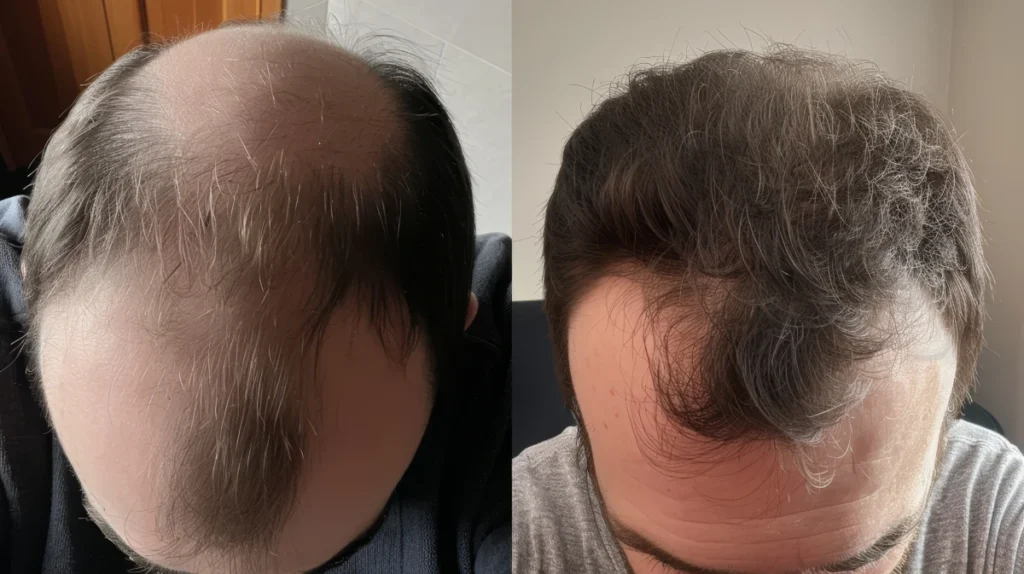
Our results are not as dramatic as a hair transplant — and we will tell you that clearly. What we offer is a biological correction that, for many patients, produces visible regrowth of miniaturised hairs and significant slowing of progression — without creating a lifetime drug dependency.

Why Patients Choose Sanjeevan for Androgenetic Alopecia Treatment in Hyderabad

Homeopathic protocols that reduce DHT activity at the follicle level without systemic hormonal disruption or finasteride-related side effects.
Microbiome correction reduces the systemic inflammation that accelerates follicle miniaturisation in genetically susceptible individuals.
Scalp mesotherapy and laser stimulation activate miniaturised follicles and increase the anagen (growth) phase of the hair cycle.

Why Androgenetic Alopecia Continues Even With Treatment — and What We Do Differently

Androgenetic alopecia occurs when DHT (dihydrotestosterone) binds to androgen receptors in genetically susceptible hair follicles, progressively miniaturising them over years. The standard treatment options target the symptom: minoxidil stimulates growth without reducing DHT; finasteride reduces DHT systemically but carries documented risks of sexual dysfunction and post-finasteride syndrome.

At Sanjeevan, we use a three-layer approach: Homeopathic DHT modulation at the scalp level (reducing androgen receptor sensitivity without systemic hormonal interference), gut microbiome correction (reducing the chronic low-grade inflammation that accelerates the process in genetically susceptible individuals), and targeted scalp bio-stimulation (reactivating miniaturised follicles that have not yet scarred).

We are honest that results vary significantly based on the stage of progression. Early-stage cases with miniaturised but viable follicles respond best. Advanced cases with large areas of complete follicle loss have limited regrowth potential — and we will tell you this clearly at consultation.

YOUR TREATMENT JOURNEY

How We Treat Androgenetic Alopecia Treatment in Hyderabad at Sanjeevan

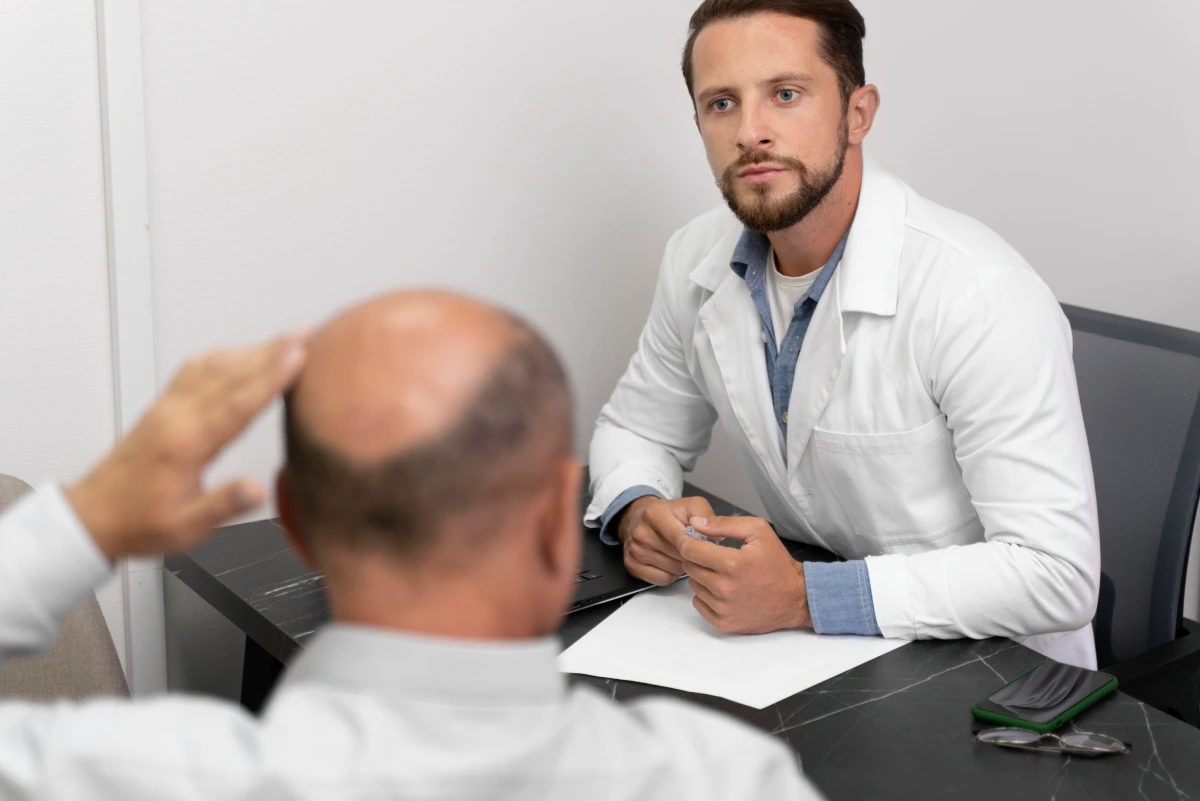
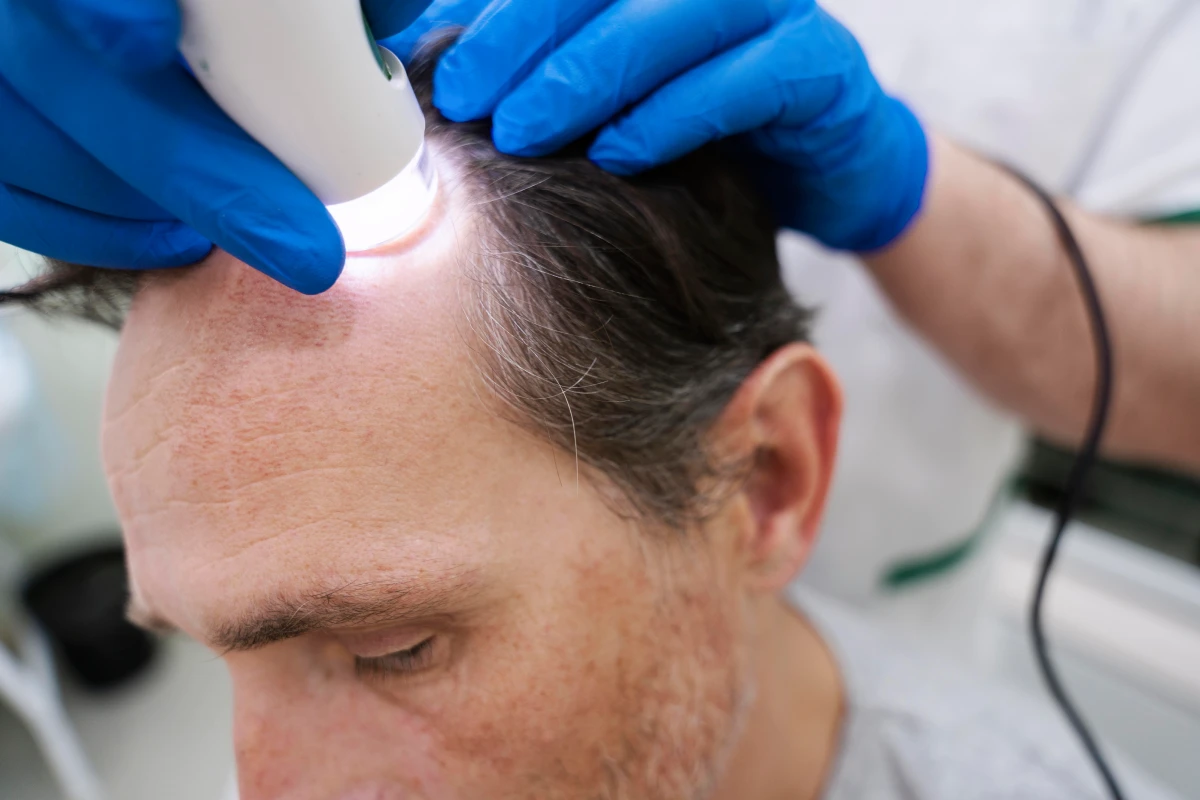
Full hormonal mapping, DHT sensitivity assessment, gut health evaluation, scalp examination, and staging of progression. Realistic expectations set at this stage.
Constitutional Homeopathic treatment calibrated to reduce DHT activity and androgen receptor sensitivity at the follicle level. Dispensed and reviewed regularly.
Microbiome restoration to reduce systemic inflammation and improve delivery of nutrients to remaining follicles.
Mesotherapy, laser stimulation, and monthly progress photography to track response. Protocol adjusted at each review.

Results Strip

Early Stage
Best response window
3–6 Mo
Visible stabilisation
0
Finasteride used
0
Finasteride used
customer Review

What Our Clients Say

Can androgenetic alopecia be reversed?
In early-stage cases with miniaturised but viable follicles, significant reversal is possible. In advanced cases with large areas of complete follicle loss, the focus is on slowing progression and maximising density in remaining areas. Your doctor will stage your case and give honest expectations at consultation.
Is androgenetic alopecia treatable in women?
Yes. Female pattern hair loss (FPHL) is more diffuse than the male pattern and responds well to our protocol — particularly when hormonal drivers like PCOD, thyroid dysfunction, or post-menopausal androgen changes are identified and corrected alongside the scalp treatment.
How is Sanjeevan's approach different from a hair transplant?
A hair transplant moves existing hair — it does not create new follicles or stop the progression of alopecia. Without treating the underlying biology, transplanted hair may continue thinning. Sanjeevan corrects the internal environment that is causing the progression. Many patients use our protocol alongside or after transplant to protect their results.

Related Conditions & Treatments

Androgenetic Alopecia · PCOD Hair Loss · Alopecia Areata · PCOD Treatment · Thyroid Treatment · Hair Regrowth Program.