

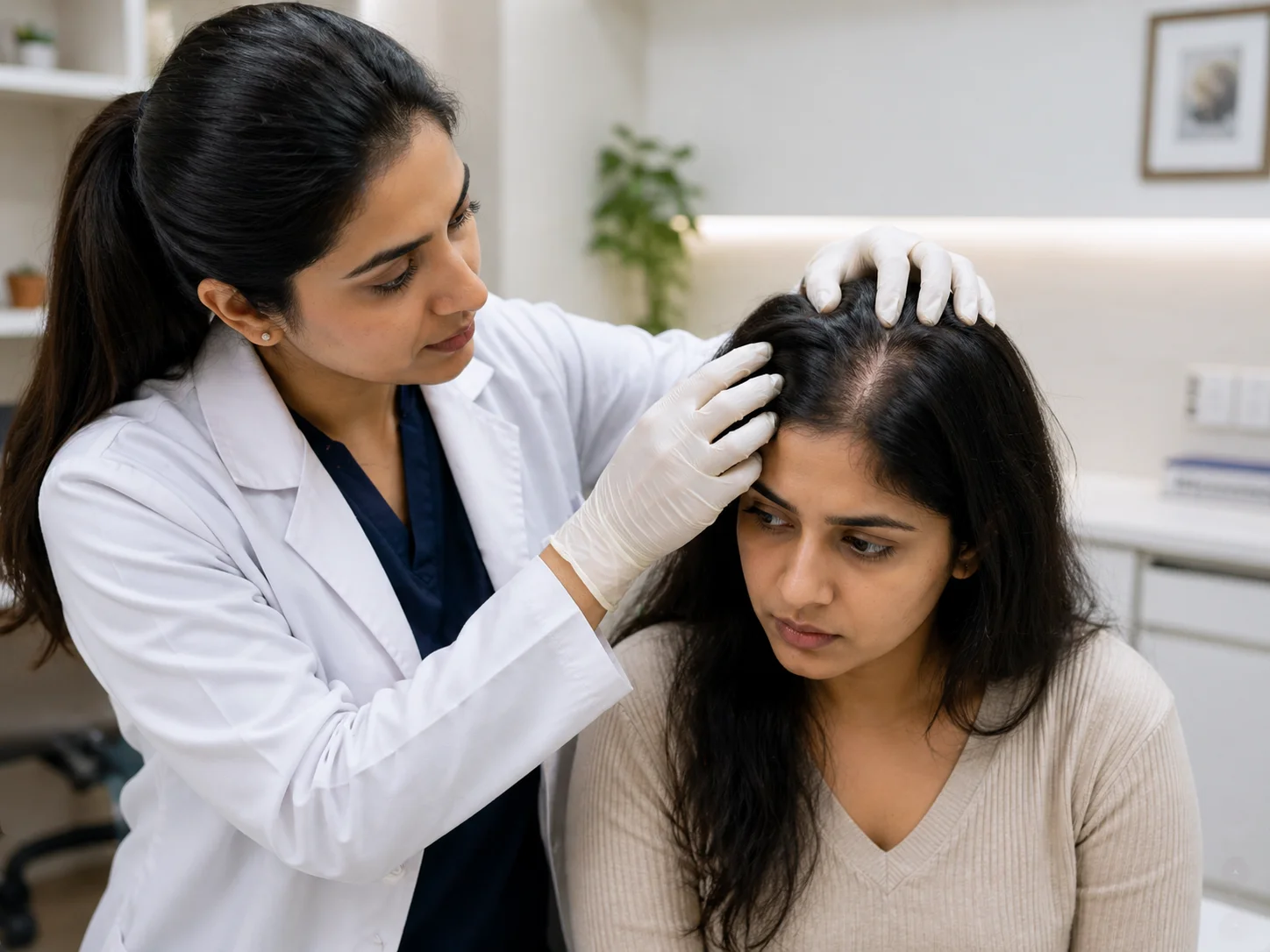


Hair loss in women with PCOD is caused by elevated androgens, insulin resistance, and chronic systemic inflammation — all of which are driven internally. No shampoo, serum, or scalp therapy can correct what is happening inside.
PCOD (Polycystic Ovarian Disease) causes androgen excess, which damages hair follicles in a pattern similar to male pattern baldness — particularly at the crown and along the parting. Simultaneously, the insulin resistance and gut dysbiosis associated with PCOD worsen the gut-hair axis, further reducing nutrient delivery to follicles.
The standard response — oral contraceptive pills — masks the hormonal output without correcting the underlying biology. When OCP is stopped, hair loss typically reasserts. At Sanjeevan, we correct the root cause: insulin resistance, gut dysbiosis, and androgen excess. When these improve, the hair follows.
PCOD-related hair loss is medically classified as a form of androgenetic alopecia — driven by elevated androgens (particularly testosterone and DHT) that sensitise scalp follicles. The source of these elevated androgens is the PCOD-driven hormonal environment: insulin resistance stimulates the ovaries to produce excess androgens, which then act on androgen-sensitive follicles.
This is why topical treatments, PRP, and minoxidil produce limited results in PCOD hair loss — they stimulate the scalp without addressing the hormonal signal damaging it. Our protocol targets all three biological drivers of PCOD (insulin resistance, gut dysbiosis, androgen excess) using Homeopathic medicine and functional nutrition, while simultaneously treating the scalp with activation therapies.
Most patients see meaningful reduction in hair shedding within 8–12 weeks as androgens normalise. Regrowth becomes visible over 3–6 months as the follicle environment stabilises.
Acne Treatment · Pigmentation · HydraFacial · Laser Treatments · Skin Boosters · Skin Healing Program
CTA Body Book a consultation to assess your PCOD-driven hair loss and build a protocol that addresses both simultaneously.